
Makar Sankranti: A Celebration of Tradition Across India 🌾✨
- telishital14

- Jan 12, 2025
- 5 min read
Makar Sankranti, one of the most widely celebrated festivals in India, marks the transition of the sun into the zodiac sign of Capricorn (Makar). This festival, which typically falls on January 14th, is a time of joy, renewal, and abundant harvests 🌾🍂. Though it is celebrated across India, the way it is observed varies significantly from state to state, with unique customs and vibrant regional flavors. Let’s take a journey through the cultural traditions of Maharashtra, Gujarat, Karnataka, and other states, where Makar Sankranti holds deep significance.
Makar Sankranti in Maharashtra 🪁🌸
In Maharashtra, Makar Sankranti is celebrated with great enthusiasm, especially as it marks the end of winter and the beginning of a more favorable harvest season 🌞🌿. One of the most important customs is the exchange of tilgul (sesame seeds and jaggery sweets) 🍬. These are shared among friends and family with the greeting, "Tilgul ghya, god god bola," meaning, "Take the sesame and jaggery, and speak sweet words" 😊💬. This tradition symbolizes the sweetness of life and the hope for peace and harmony in the year ahead.

Kite Flying: A major highlight of Makar Sankranti in Maharashtra is the kite flying tradition 🪁🎉. The skies are filled with colorful kites, as people of all ages participate in friendly kite battles, trying to cut the strings of their opponents' kites while ensuring their own stays afloat. This event turns the sky into a beautiful canvas of vibrant colors 🎨🪁.
Puran Poli & Khichdi: Another part of the celebration includes the preparation of delicious foods like puran poli (a sweet flatbread) and khichdi (a rice-lentil dish) 🍛, enjoyed by families during the festivities.
Makar Sankranti in Gujarat 🪁🌞
In Gujarat, Makar Sankranti is celebrated with unparalleled zeal, particularly in cities like Ahmedabad and Surat. Here, the festival is known as Uttarayan, and it is synonymous with kite flying. The skies are a dazzling spectacle of kites of all sizes and colors 🎨🪁.
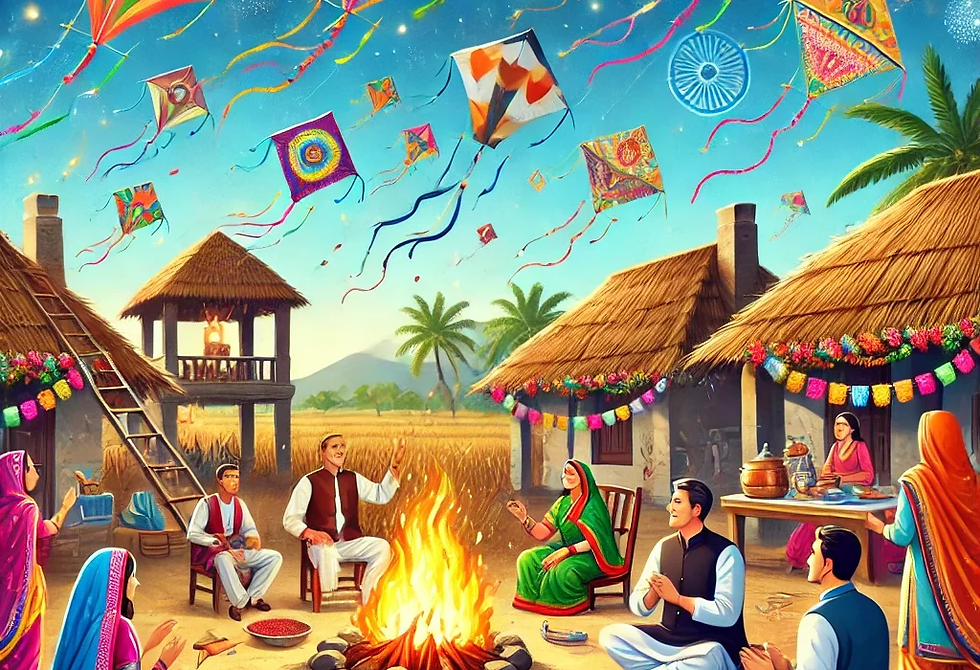
Kite Festival: The Uttarayan Kite Festival attracts enthusiasts from all over the world 🌍, where both amateurs and seasoned kite flyers compete to cut each other's kites. The event has grown into a grand international festival, with elaborate kite designs and innovative techniques on display.
Sweets and Savories: In Gujarat, the day is also marked by the consumption of til chikki (sesame brittle) and undhiyu (a mixed vegetable dish) 🍠, which are symbolic of the season's harvest. Khichdi is another dish enjoyed, as it symbolizes prosperity and warmth 🍚.
Bonfires: The evening brings people together around bonfires 🔥, where people sing traditional songs and dance around the fire to celebrate the harvest 💃🕺.
Makar Sankranti in Karnataka 🪁🌾
In Karnataka, Makar Sankranti, known as Suggi or Pongal, is a time to express gratitude for the bountiful harvest and to honor nature 🌳. The festival is celebrated with simple yet deeply meaningful customs.
Pongal Dish: In rural areas, a special dish called "Pongal" (a rice-based dish with milk and jaggery) is prepared as an offering to the sun god 🌞. The ritual of cooking this dish in an open area is a part of the celebration. It’s a symbol of abundance and prosperity 🥘.
Kite Flying: Much like other states, people in Karnataka also indulge in kite flying 🪁. Children and adults alike join in this exciting tradition, often gathering at open grounds and terraces for a day full of fun and friendly competition 🎉.
Rituals and Pooja: In Karnataka, it is common to perform pujas (prayers) to the Sun God to mark the start of a new harvest cycle. Offerings of sugarcane, jaggery, and other fruits are made as part of the ritual 🍌🍍.
Makar Sankranti in Other States 🌾🎉
Makar Sankranti is celebrated with variations across India, and every region adds its own special flavor to the festivities.
Tamil Nadu – Pongal 🌾🌞
In Tamil Nadu, the festival is known as Pongal, and it’s one of the biggest harvest festivals 🎉. The highlight of Pongal is the preparation of the dish Pongal, which is made with freshly harvested rice, milk, and jaggery, cooked in an open pot to symbolize abundance 🍚. People decorate their homes with kolam (rangoli) 🎨 and often celebrate with grand processions, traditional dances 💃, and music 🎶. Jallikattu, a bull-taming sport, is also an important part of the celebration in some regions 🐂.

Punjab – Lohri and Maghi 🌾🔥
In Punjab, the festival of Makar Sankranti is celebrated as Lohri and Maghi. Lohri marks the end of the winter solstice and is celebrated with bonfires 🔥, dances (especially the Bhangra) 💃, and singing 🎶. People gather around the fire, tossing sesame seeds, sugarcane, and other offerings as they pray for a good harvest 🌾.
Uttar Pradesh and Bihar – Khichdi and Bonfires 🍚🔥
In Uttar Pradesh and Bihar, Makar Sankranti is a day of family reunions, where people take holy dips in rivers like the Ganges 🌊. The day is also marked by the preparation of khichdi (a rice-lentil dish) 🍚 which is offered as prasad. People gather around bonfires 🔥, sing traditional songs 🎶, and offer sesame seeds and jaggery to the fire as a symbol of gratitude 💖.
Assam – Magh Bihu 🎉🔥
In Assam, Makar Sankranti is celebrated as Magh Bihu 🎉. It marks the end of the harvesting season and is celebrated with feasts 🍽️, traditional dances 💃, and bonfires 🔥. The day begins with people taking early morning dips in the Brahmaputra River for purification 🌊. People celebrate with special dishes like pithas (rice cakes) 🍰, larus (sweet balls) 🍡, and fish curry 🐟.
Bhogi: The Festival Before Makar Sankranti 🔥✨
In some parts of India, especially in Andhra Pradesh, Telangana, and Tamil Nadu, Bhogi is celebrated a day before Makar Sankranti, as part of the harvest festival tradition 🌾. It is a day to honor the gods and bid farewell to the old and welcome the new, symbolized by the burning of old belongings in bonfires 🔥. People gather around these fires, singing traditional songs and celebrating with sweets and dances 💃🕺. This is also a time for families to clean their homes, and people prepare for the upcoming festivities of Makar Sankranti.
Significance of Makar Sankranti 🌞🎋
Makar Sankranti holds profound spiritual significance. It marks the day when the sun begins its northward journey (Uttarayan), symbolizing the arrival of longer, warmer days ☀️. It is a time to pay homage to the sun god, who is believed to bring light, warmth, and prosperity 🌞. People celebrate the festival with prayers for a good harvest 🌾 and the well-being of their families 👨👩👧👦.
The festival is not only about food, fun, and rituals—it’s also about unity and community. Across India, Makar Sankranti brings together people from different walks of life, transcending regional, linguistic, and cultural barriers 👫🤝.
🎆💫
Makar Sankranti is much more than a festival—it’s a celebration of nature’s bounty, the warmth of the sun, and the spirit of togetherness 🥳. Whether through the vibrant kite flying of Gujarat 🪁, the delicious sweets of Maharashtra 🍬, the traditional dishes of Karnataka 🍚, or the colorful bonfires of Punjab 🔥, this festival binds the diverse regions of India in shared joy and gratitude 🙏.
No matter where you are in India, Makar Sankranti is a reminder of the unity that exists in diversity 🌍, and the eternal cycle of the seasons that connect us all to the earth beneath our feet 🌏✨.


Happy Makar Sankranti ❤️