
Unveiling the Vibrancy of Rajasthani Culture: A Journey Through Traditions, Art, and Heritage 🌄👑
- telishital14

- Jan 16, 2025
- 5 min read
Exploring the Rich Tapestry of Rajasthani Culture
Rajasthan, often referred to as the "Land of Kings," is a state in northwestern India known for its royal history, stunning architecture, and vibrant culture. The culture of Rajasthan is as colorful and diverse as the state itself. From its folk music and dance to its festivals, cuisine, and traditional art forms, Rajasthan offers a unique blend of old-world charm and contemporary vitality. In this blog, we'll take a closer look at the different aspects that make Rajasthani culture truly special.
1. Folk Music and Dance
Rajasthani folk music is a celebration of life, depicting the region’s history, landscape, and emotions. It has a unique melodic style, often accompanied by traditional instruments such as the sarangi, dholak, tabla, and harmonium. Some of the popular folk music forms include Maand, Ghoomar, Bhavai, and Kalbeliya.
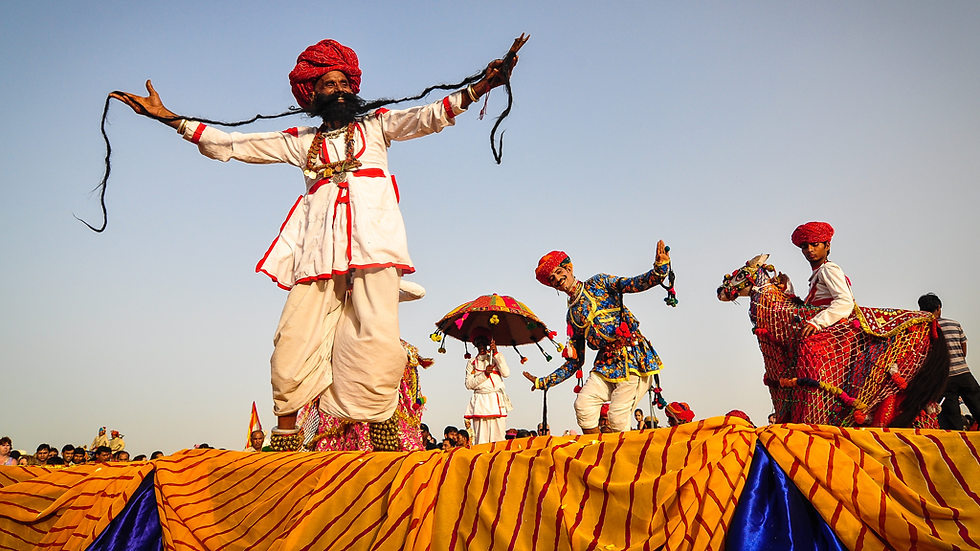
Ghoomar Dance: This is one of the most famous folk dances of Rajasthan, typically performed by women wearing colorful ghagras (skirts) that swirl beautifully as they spin. It is often performed during festivals, weddings, and other joyous occasions.
Kalbeliya Dance: This energetic and graceful dance is performed by the Kalbeliya tribe, known for their traditional snake-charming skills. The women of this tribe perform this dance to the rhythm of tambourines and drums.
Kachi Ghodi: A traditional dance that involves a mock horse-riding performance. It’s a depiction of the royal lifestyle, often seen in Rajasthani folk performances.
2. Rich Traditions of Art and Craft
Rajasthan has a deep-rooted history in fine arts and crafts, and its artisans are among the finest in India. The state’s art forms are known for their intricate designs and vibrant colors, which tell stories of its royal past and cultural diversity.
Miniature Paintings: The miniature paintings of Rajasthan, particularly from Jaipur, Udaipur, and Nathdwara, are world-renowned for their detailed, vibrant representations of historical events, folklore, and royal life. These paintings often depict scenes from Hindu mythology, such as the Radha-Krishna tales.
Block Printing: The traditional art of block printing, particularly from regions like Sanganer and Bagru, produces beautiful textiles with geometric patterns and vibrant colors. The technique is still practiced by artisans today, making it an essential part of Rajasthani heritage.
Blue Pottery: A distinctive style of pottery, which originated in Jaipur, known for its unique blue color and designs inspired by Persian, Mughal, and Indian traditions.

3. Cuisine
Rajasthani cuisine is as rich and diverse as its culture. It reflects the harsh desert climate of the state with a wide variety of spicy, tangy, and aromatic dishes. Some of the signature dishes of Rajasthan include:
Dal Baati Churma: A quintessential Rajasthani dish, it consists of baati (wheat dough balls) baked to perfection, served with a spicy dal (lentil curry), and topped with churma, a sweet dish made from crushed wheat, sugar, and ghee.
Laal Maas: A fiery mutton curry made with red chilies and rich spices, it is an iconic Rajasthani dish, known for its bold flavor and heat.
Gatte ki Sabzi: A curry made from gram flour dumplings, which are boiled and then cooked in a spicy gravy, is another staple of Rajasthani cuisine.
Ker Sangri: A unique desert delicacy made with dried berries (ker) and beans (sangri), it’s a delicious and tangy dish prepared in various ways.
Mawa Kachori and Ghevar: For those with a sweet tooth, mawa kachori (a deep-fried pastry stuffed with sweetened khoya) and ghevar (a traditional Rajasthani sweet dish) are a must-try.

4. Festivals and Celebrations
Rajasthan is known for its grand celebrations and festivals that showcase the state’s rich cultural heritage. From religious festivals to folk fairs, these events bring the entire community together in a display of joy and enthusiasm.
Pushkar Fair: The annual Pushkar Camel Fair is one of the largest livestock fairs in the world. Held in the town of Pushkar, it is also a cultural celebration featuring folk music, dance, and colorful processions.
Teej and Gangaur: These are two of the most important festivals for women in Rajasthan. Teej is a celebration of the monsoon season, marked by women dressing in colorful attire, singing folk songs, and participating in processions. Gangaur is a festival dedicated to Goddess Gauri, and women worship her for marital happiness and prosperity.
Diwali: Like the rest of India, Diwali is celebrated with great pomp and grandeur in Rajasthan, with homes and streets illuminated by oil lamps and fireworks lighting up the sky.
Makar Sankranti: Celebrated with kite flying, this festival marks the end of the winter solstice and the start of the harvest season. In Rajasthan, the skies are filled with colorful kites as people gather to celebrate the day.
5. Architecture and Heritage
Rajasthan is home to some of the most iconic architectural marvels in India. The palaces, forts, and temples are a testament to the state’s rich history and royal legacy.
Amber Fort (Jaipur): A stunning fusion of Mughal and Rajput architecture, Amber Fort is known for its grand palaces, courtyards, and intricate carvings.
City Palace (Udaipur): Located on the banks of Lake Pichola, the City Palace is a grand example of Rajasthani architecture, with its beautiful courtyards, gardens, and artwork that tell tales of the region’s royal past.
Jaisalmer Fort: Known as the "Golden Fort" due to its yellow sandstone, Jaisalmer Fort is a living fort where people still reside. It is a UNESCO World Heritage site, steeped in history and culture.
Hawa Mahal (Jaipur): Also known as the "Palace of Winds," this five-story palace features hundreds of small windows, designed to allow royal women to observe life on the streets without being seen.

6. Clothing and Jewelry
Rajasthan is renowned for its traditional attire, which varies according to region and occasion.
Women: The traditional attire for women is the ghagra-choli with a odhani (veil). The colorful patterns, mirror work, and embroidery are reflective of the state’s vibrant culture. Women also wear heavy silver jewelry, including bajuband (arm bands), haathphool (hand jewelry), and maang tikka (forehead jewelry).
Men: Men typically wear dhoti or kurta-pajama, often paired with a safa (turban). The turbans come in various colors and styles, representing different regions or communities.

Rajasthani culture is a beautiful amalgamation of tradition, art, music, and history. Every corner of Rajasthan speaks of royal grandeur, artistic brilliance, and an unbreakable connection to its heritage. Whether you’re mesmerized by the folk dance, enchanted by the intricate artwork, or seduced by the flavors of its cuisine, Rajasthani culture offers a unique experience that lingers long after you leave.


beautiful blend of rich heritage and vibrant traditions✨️