
🤖 The AI Trends That Will Define 2026 : AI, Automation & The Rise of Intelligent Systems

Artificial Intelligence isn’t just advancing—it’s redefining economies, industries, and the very nature of human work. By 2026, AI will no longer be viewed as a tool sitting on the sidelines. It will be embedded in workflows, governance, infrastructure, and daily life.
Let’s break down the most powerful AI trends shaping 2026 — backed by research, market projections, and global momentum.

1️⃣ AI Job Impact & Market Growth 💼📈
AI is influencing how work gets done, not just who does it.
🔎 Key Insights:
By 2026, AI will impact around 80% of jobs.
The global AI market is projected to exceed $400 billion.
The shift is moving from replacement to augmentation.
Rather than eliminating roles entirely, AI is:
Automating repetitive tasks
Assisting decision-making
Enhancing productivity
Creating hybrid human-AI roles
We are entering the age of the AI-augmented workforce, not a jobless future.
2️⃣ Persistent & Personalized AI 🧠✨
AI is evolving from disposable chatbot interactions to long-term intelligent assistants.
📊 The Data:
82% of users prefer AI that remembers past interactions.
Personalized AI assistants see 3.5x higher engagement.
This means:
AI remembers your tone, goals, and preferences
Conversations feel continuous, not reset every time
AI becomes a familiar digital collaborator
By 2026, AI assistants will function more like colleagues than tools.
3️⃣ Geopolitics of AI 🌍⚖️
AI has become a national priority.
Countries like China and regions across the Middle East are investing aggressively in AI infrastructure, research, and talent pipelines.
🌐 What’s Happening:
The number of formal AI strategies worldwide has tripled.
Massive investments in AI education and chip manufacturing.
AI capability is reshaping global economic power.
AI is no longer just a tech race—it’s a geopolitical strategy.
4️⃣ Multimodal AI: Beyond Text 🗣️👁️
AI interaction is expanding beyond typing.
📱 Current Behavior:
55% of smartphone users use voice AI weekly.
Visual AI queries surged by 670% in 2025.
AI can now:
Understand images
Analyze videos
Interpret tone of voice
Combine text, audio, and visuals
This multimodal shift makes AI more natural and human-like in communication.
5️⃣ The Rise of Physical AI 🤖🏭
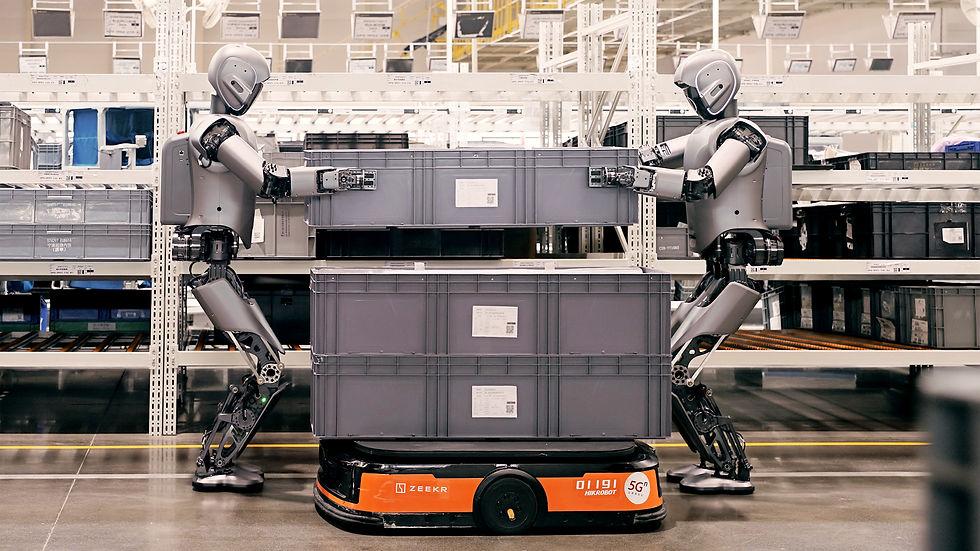
AI is leaving the screen and entering the physical world.
📊 Market Projections:
Humanoid robot market expected to hit $38 billion by 2030.
23 major companies are actively building humanoid robots (up from 7 in 2023).
AI-powered robots are:
Assisting in factories
Supporting logistics
Performing hazardous tasks
Working alongside humans
Automation is becoming collaborative rather than isolated.
6️⃣ AI & Advertising Integration 📢💡
AI platforms are becoming major advertising ecosystems.
📈 Key Numbers:
AI advertising market projected to reach $107 billion by 2028.
58% of users accept ads in free AI tools.
The future challenge:
Ads must be relevant
They must enhance—not disrupt—trust
Transparency becomes critical
AI will power hyper-personalized marketing experiences.
7️⃣ Context Is the New Superpower 📚🧩
Prompt engineering is fading. Contextual intelligence is rising.
AI models now support massive context windows, meaning:
You can input entire documents
AI can reason across long histories
Outputs are more nuanced and accurate
This has led to a surge in context-aware searches and professional-grade AI analysis.
The future isn’t about clever prompts—it’s about richer context.
8️⃣ Democratization of Software Development 💻🚀
AI is lowering the barrier to software creation.
📊 Stats:
43% of new applications in 2025 were built using AI-assisted no-code tools.
AI coding assistants boost productivity by 40–60%.
This means:
Non-developers can build apps
Developers ship products faster
Startups scale with smaller teams
Software creation is becoming accessible to everyone.
9️⃣ Human-in-the-Loop Over Full Autonomy 🔄👨💼
The hype around fully autonomous AI agents is cooling.
📌 Reality Check:
89% of successful AI implementations involve human oversight.
Companies are prioritizing guided workflows over full automation.
Why?
Accountability matters
Reliability issues persist
Humans provide judgment and ethics
The future isn’t AI replacing humans—it’s AI supporting human decisions.
🔟 The Evolving Competitive Landscape 🏁
Model performance alone is no longer the differentiator.
With API pricing dropping significantly, advanced AI models are more accessible than ever.
Companies now compete on:
Data quality
Workflow integration
UX design
Industry-specific tuning
By 2026, the winning AI platforms won’t necessarily have the “smartest” model—they’ll have the best integration.
🌟The AI Era of 2026
The AI transformation is no longer experimental—it’s operational.
By 2026:
AI will influence 80% of jobs
Robots will work beside humans
Nations will compete on AI infrastructure
Personalized AI will feel like digital partners
Software creation will be democratized
Context-aware systems will outperform prompt hacks
The defining theme?
👉 Integration over isolation.
👉 Collaboration over replacement.
👉 Context over commands.
The future of AI isn’t science fiction—it’s strategic, structured, and already unfolding. 🚀


Comments